
Key points at a glance
- Even a purely informative newsletter usually counts as advertising. You need prior consent: in Germany under § 7 (2) UWG, in Austria under § 174 (3) TKG 2021, there also towards businesses.
- Double opt-in is not mandatory, but it is the usual way to prove consent.
- The exception for existing clients is narrow: only your own similar services, with a notice of the right to object at collection and in every email.
- Every issue needs sender, unsubscribe link and imprint; the mailing tool needs a data processing agreement.
- Never send with an open mailing list in “To” or “CC”: it reveals who is a client.
This post is general information, not legal or tax advice for your individual case. Laws, professional guidelines and chamber fees change: check the details with your chamber, the relevant authority or your professional association before you make a decision.
Why a newsletter for professional firms
The website and Google profile work when someone is searching. The newsletter works between matters. A tax adviser who reminds clients of the advance payments before every quarter, a lawyer who points out limitation periods shortly before the end of the year, an auditor who summarises the disclosure deadlines: messages like these are useful, get forwarded and bring follow-up work. Many tax firms know this as the client circular on paper; the newsletter is its digital version.
Legally, however, the content makes hardly any difference. Even a factual newsletter serves to keep the firm in mind and to win work, and therefore as a rule counts as advertising. This means the rules for email advertising apply, and from the very first recipient.
Consent and double opt-in
In Germany, email advertising without prior express consent is an unreasonable nuisance (§ 7 (2) UWG). In Austria it is impermissible without prior consent (§ 174 (3) TKG 2021), and expressly also towards businesses, so also for the newsletter to the managing director of a limited company. In both countries the GDPR applies as well: consent must be given freely, for the specific purpose and on an informed basis, and you must be able to prove it (Art. 7 (1) GDPR).
Sign-up form
Only the email address is mandatory, a name is optional. Next to it, one sentence on what you send and how often, with a link to the privacy policy. No pre-ticked box, no tying to the contact form.
Confirmation email
The system sends an email with a confirmation link. It contains no advertising, only the request to confirm and the note that nothing further happens without a click.
Log
The time of sign-up and of confirmation are stored, along with the wording of the consent. This lets you prove in a dispute who agreed and when.
Welcome email
Sending only begins after confirmation. A short welcome with a note on how to unsubscribe builds trust.

The exception for existing clients
Both countries have an exception for existing customers. It is narrower than many believe and does not cover a general newsletter to all contacts.
| Requirement | Germany, § 7 (3) UWG | Austria, § 174 (4) TKG 2021 |
|---|---|---|
| Origin of the address | obtained from the customer herself in connection with the sale of goods or a service | obtained in connection with a sale or a service to your own customers |
| Content | direct advertising for your own similar services | direct advertising for your own similar services |
| Objection | no objection; clear notice of the right to object at collection and at every use | clear opportunity to refuse free of charge and easily at collection and with every message |
| Additionally | no further requirement | no entry in the RTR's ECG list (opt-out register) |
For professional firms this means: anyone who gave you their address in the course of a matter may be informed about similar services if they were already told about the right to object when the matter was accepted. Contacts from business cards, events, enquiries without a matter or opponents in proceedings are not covered. For them you need consent. For mediation the exception rarely fits, because you maintain your neutrality towards both parties.
Sender, unsubscribing and imprint
Every issue must be recognisably from your firm. In Germany, neither the sender nor the advertising nature may be concealed in the header or subject line (§ 6 (2) DDG); in Austria, email advertising with a concealed sender or without a valid address for unsubscribing is always impermissible (§ 174 (5) TKG 2021). Unsubscribing must be as easy as signing up: one click, no logging into a customer account, no reason required.
In every issue
- The firm name as sender and a reply address that is actually read
- A factual subject line that describes the content
- Unsubscribe link and notice of the right to object
- Imprint in the footer: in Germany the details as on the website under § 5 DDG, for editorial content the responsible person under § 18 (2) MStV
- In Austria the imprint under § 24 (3) MedienG and a link to the disclosure under § 25 MedienG
- Link to the privacy policy
You can create the imprint text for the website and footer with the imprint generator. Which additional details your profession requires is set out in the guides to mandatory information, for example for tax advisers in Austria or lawyers in Germany.
The mailing tool: EU hosting and DPA
A newsletter with more than a handful of recipients does not belong in your normal email program. A mailing tool manages sign-ups, double opt-in and unsubscriptions and sends every email individually. To do so, it processes personal data on your behalf. Look out for these points when choosing one:
- Data processing agreement under Art. 28 GDPR, provided by the provider as standard
- Servers and ideally also headquarters in the EU; for providers from third countries, check the legal basis for the transfer
- Double opt-in with a log and automatic unsubscription without any action on your part
- Open and click tracking that can be switched off per list
- Your own sender domain with correctly configured SPF, DKIM and DMARC records, so that the emails do not end up in spam
Content that gets read
A good firm newsletter is short, regular and useful. Three to five topics per issue, each with two or three sentences and a link to the detailed expert article on your website. What suits which profession:
| Profession | Recurring topics | Occasion-based topics |
|---|---|---|
| Tax adviser | Tax dates for the month or quarter, advance payments | Tax reforms, new flat rates and thresholds, year-end tips |
| Certified bookkeeper | Payroll dates (Lohnverrechnung or Lohnbuchhaltung), submitting receipts | New values for benefits in kind, changes to reporting and e-invoicing |
| Lawyer | Deadlines at the end of the year, such as limitation periods | Changes in the law and important judgments, put into context factually |
| Auditor | Deadlines for preparing and disclosing annual accounts | New audit and reporting obligations |
| Mediator | Dates for information evenings and workshops | New services, such as mediation in family businesses |
| Notary | Factual notes, for example on lasting powers of attorney and wills | Changes in inheritance, family or company law |
Professional law applies in the newsletter too: no stories about matters without consent, no promises of success, no titles that have not been awarded. News from the firm, such as a new colleague or changed opening hours over the holidays, is welcome but should not make up the main part. Licensed client information from specialist publishers saves time; add a paragraph of your own so that the newsletter sounds like your firm.
Rhythm and measuring without excessive tracking
Monthly or quarterly is realistic for most firms. Tax and bookkeeping firms align sending with the deadlines, law firms more with occasions. More important than the frequency is reliability: anyone who announces a monthly newsletter in January should still be sending it in June.
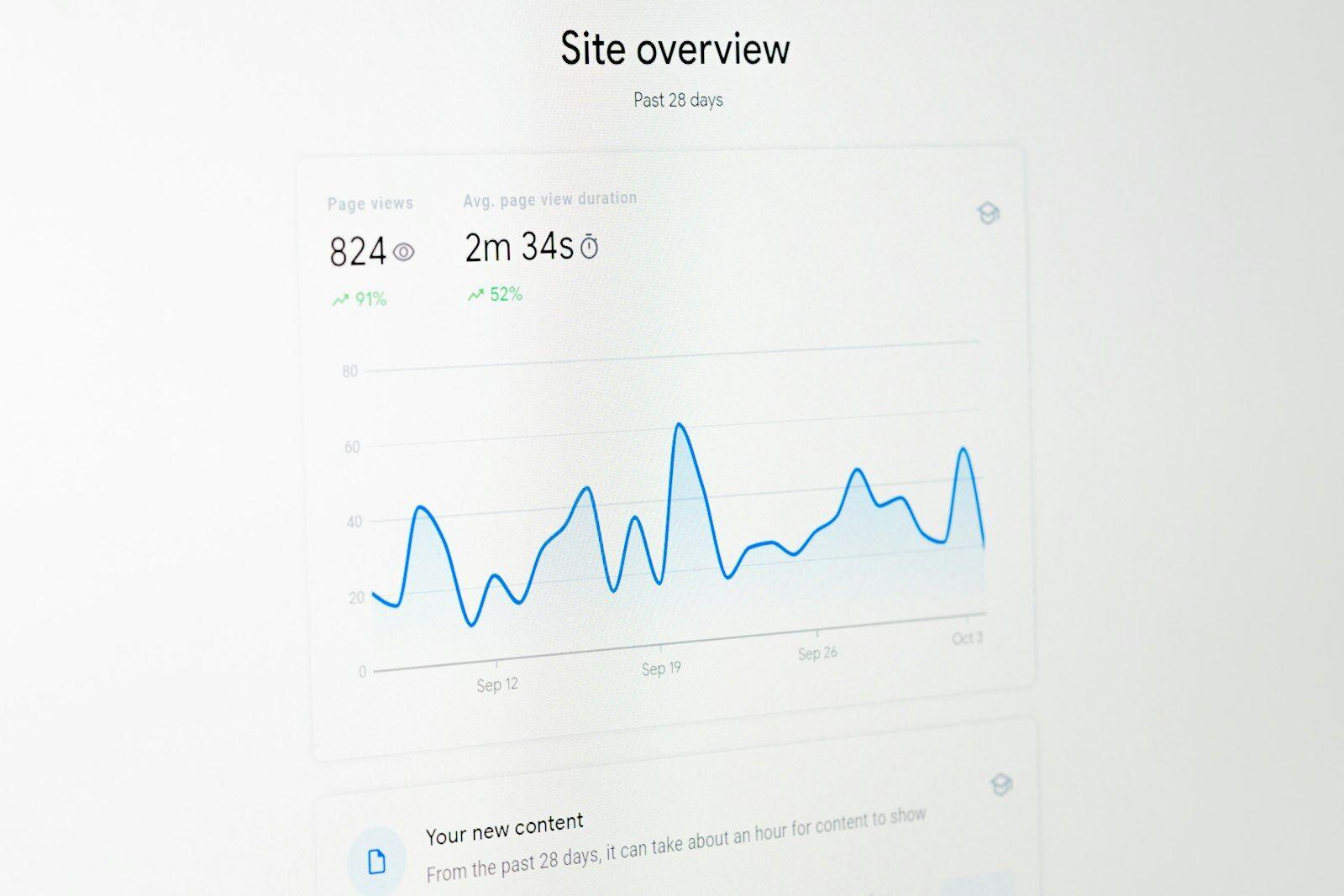
Mailing tools measure by default who opened which email and clicked which link. This per-person analysis is delicate under data protection law; many data protection authorities require separate consent for it. For a professional firm, less is almost always enough: the number of unsubscriptions, aggregated click figures without personal reference and the visits to the linked articles in your website statistics. Open rates are inaccurate anyway, because many email programs preload or block images.
Confidentiality: the BCC error
The most common and most serious error happens without a newsletter tool: someone sends information to all clients from the normal mailbox and puts the addresses in “To” or “CC”. Every recipient can now see who else is a client of the firm. This is a personal data breach that you may have to report to the supervisory authority within 72 hours (Art. 33 GDPR), and at the same time a breach of professional confidentiality, because even the fact that a matter exists is protected.
How to get it right
- Use a mailing tool that delivers every email individually
- Separate lists by purpose and only include people with consent or a matching exception
- Send a test email to yourself before sending
- Train staff and prohibit group emails from the mailbox
Better avoid
- Put clients in “To” or “CC”, not even “just this once”
- Rely on BCC in the normal mailbox; one wrong click is enough
- Use purchased address lists or addresses from directories
- Write personalised content relating to a matter into the newsletter
The newsletter works best together with a website that holds the detailed answers, and a clean presentation in every single email. You can create the matching signature with the email signature generator; which content belongs on the website is described in the guide Content for a firm website.
A website your newsletter can link to
Our firm websites come with a guides section for your expert articles, a complete imprint and a privacy policy that also covers the newsletter. Request a free preview.
A no-obligation preview of how your firm website could look with us.
Sources
- Gesetz gegen den unlauteren Wettbewerb (Unfair Competition Act) § 7 (unreasonable nuisance)
- RIS – TKG 2021 § 174 (unsolicited messages)
- General Data Protection Regulation (EU) 2016/679
- Digitale-Dienste-Gesetz § 6 (commercial communications)
- Digitale-Dienste-Gesetz § 5 (imprint)
- Medienstaatsvertrag § 18 (information obligations)
- RIS – Mediengesetz § 24 (imprint)
- Bundesnotarkammer: guideline recommendations
- RIS – Mediengesetz § 25 (disclosure)